Getting to Know Rob Janicki
His northwest Washington roots, the projects he has taken on, and the experiences that have shaped his thinking.

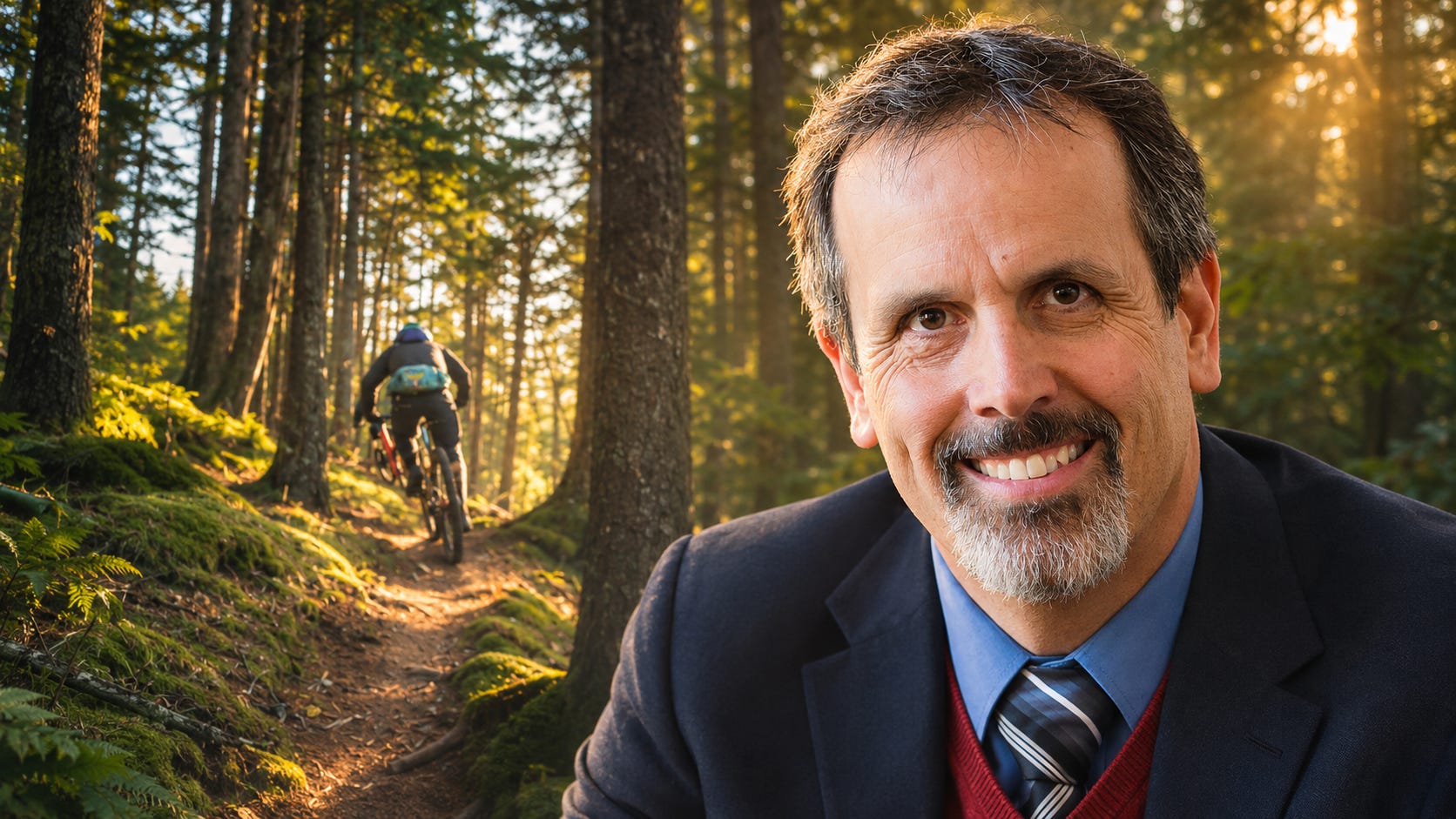
When I asked Rob Janicki about a time someone had challenged his thinking and caused him to reconsider a project, he shared a story about his mother.
Years ago, a group of businesspeople approached the Janicki family about building a waste transfer facility in Sedro-Woolley, Washington, where Rob grew up and where his family has deep roots. Rob and his brothers initially supported the proposal. They saw the potential financial benefits to the city and believed it could be a good opportunity for the community.
His mother, however, saw things differently.
The proposed facility would have been located directly across from the local high school, and she was concerned about the heavy truck traffic, garbage odors, and the impact on the people who lived, worked, and went to school nearby. She strongly opposed the project and, according to Rob, took it upon herself to appeal the decision. Ultimately, the facility was never built there.
What stayed with me was that his mother’s objections also led Rob to reconsider his own position. He and his brothers had seen an opportunity that made good financial sense, but she helped him recognize concerns they hadn’t fully appreciated. He took those objections seriously and came to see the project differently.
I think that willingness to reconsider matters. Listening politely to someone who disagrees with us is a start, but we also have to consider whether they’ve noticed something we missed and be willing to change our minds.
Rob could have shared a story about a successful venture or a project where his judgment had been proven right. The example he chose was about his mother helping him recognize something he had overlooked.
“She taught me that the numbers aren’t the whole story, and that the people who live next to a project often see what the rest of us miss,” Rob wrote.
That experience has something to offer those of us involved in conversations about economic development and the future of our communities. Financial opportunities matter, and so do the people whose lives may be affected by them. Finding a reasonable balance can be difficult when well-intentioned people see the same proposal from different perspectives.
His story seemed like a fitting place to begin getting to know him. Before forming opinions about someone based on a proposed development, I believe it’s worth learning about where they come from and the experiences that have shaped the way they see the world.
Why I Wanted to Have This Conversation
Recent discussions about the future of the former McKinley mill property have brought Rob Janicki’s name into conversations here in Port Angeles. Rob is a northwest Washington businessman whose work spans forestry, marine transportation, real estate development, and the repurposing of older industrial properties. Whatever ultimately happens with the property, I found myself curious about the person behind the name. Where did he come from? What has he accomplished in other communities, and what experiences have shaped his approach to business and development?
I began doing some research of my own, looking into his background, his companies, and some of the projects he’s been involved with throughout northwest Washington. The more I learned, the more interested I became in understanding the person behind the business proposals. Eventually, I decided to reach out to him directly, hoping to learn more about his experiences and what motivates him.
Before sharing what I learned, I want to explain how this article relates to my involvement in the public discussions taking place in Port Angeles.
The City of Port Angeles is already working through how data centers should be regulated in our community. City staff, the Planning Commission, the Utility Advisory Committee, and the City Council have been considering complicated questions about land use, environmental protections, infrastructure, and economic development. I appreciate the time, thought, and effort they are putting into that work. These aren’t easy decisions, and I believe the City is treating them with the seriousness they deserve. People have legitimate concerns and different perspectives, and they need opportunities to be heard as the City develops reasonable regulations that will serve Port Angeles well into the future.
I also want to be transparent about my own involvement. I serve on the City of Port Angeles Planning Commission and participate directly in the public process of reviewing and considering these regulations. In that role, I have a responsibility to evaluate the issues fairly, consider the interests of our entire community, and help develop recommendations based on the merits of the policies being considered.
That responsibility is entirely separate from my writing here on Clallam County Solutions. This platform reflects my personal interests, experiences, and perspectives, and I do not speak on behalf of the City or the Planning Commission.
I think it’s especially important to distinguish between the City’s consideration of data center regulations and my personal interest in learning more about Rob Janicki. The City’s work is about establishing appropriate rules and protections for our community, regardless of who might eventually seek to develop a particular property. Those decisions should be made based on sound policy, thoughtful public input, and the long-term interests of Port Angeles. They shouldn’t depend on whether we personally like or dislike an individual developer.
Likewise, my interest in getting to know Rob isn’t an attempt to influence anyone’s opinion about data centers, the proposed development, or the regulations the City is considering. Those conversations deserve to proceed independently, and I encourage people to participate in the City’s established public process.
My motivation for this article is much simpler. Someone new has entered an important conversation in our community, and I wanted to know more about him.
“Seek first to understand, then to be understood.”
— Stephen R. Covey, The 7 Habits of Highly Effective People
When we hear about a significant development proposal, it’s natural for our attention to focus on the project itself. We hear about the companies involved, the potential investments, the promises being made, and the concerns about what might happen. Those are all important considerations, but sometimes we know surprisingly little about the people behind the proposals.
In this case, I discovered someone whose family and business roots run deep in northwest Washington, with a history of involvement in projects and community initiatives that I found interesting. That doesn’t mean every project he’s been involved with has been successful, nor does it mean we should accept his assurances about future opportunities without appropriate consideration. But I believe there’s value in learning more about his background, his experiences, and the things that matter to him.
Rob and I had planned to sit down together over dinner for a more extensive conversation, but unfortunately we had to postpone. In the meantime, he took the time to respond in writing to many of the questions I had shared with him about his family, his businesses, and his involvement in other communities. What follows is largely based on his own recollections and descriptions of those experiences.
My goal isn’t to change anyone’s mind about Rob, and it’s certainly not to change anyone’s position on data centers. You may come away from this article feeling exactly as you did before reading it, and that’s perfectly fine.
I simply believe that a little more understanding is usually a good thing. We can learn about someone without agreeing with them, appreciate their accomplishments without endorsing their plans, and remain open to hearing their story while continuing to ask reasonable questions.
With that in mind, I’d like to introduce you to Rob Janicki.
Family Roots in Northwest Washington
Rob Janicki grew up in Sedro-Woolley, Washington, the sixth of eight children. When I asked about his background and what has kept him connected to northwest Washington, he described several generations of his family making a home here, building businesses, and helping others.
His grandfather immigrated from Poland between the two World Wars and eventually established the Cedar Crest Shake Mill in Sedro-Woolley. His father grew up there as well, serving in the Army during World War II before earning a degree in civil engineering from Seattle University. After working for Bethlehem Steel, he and his brother Walt started Janicki Logging and Construction in 1957.
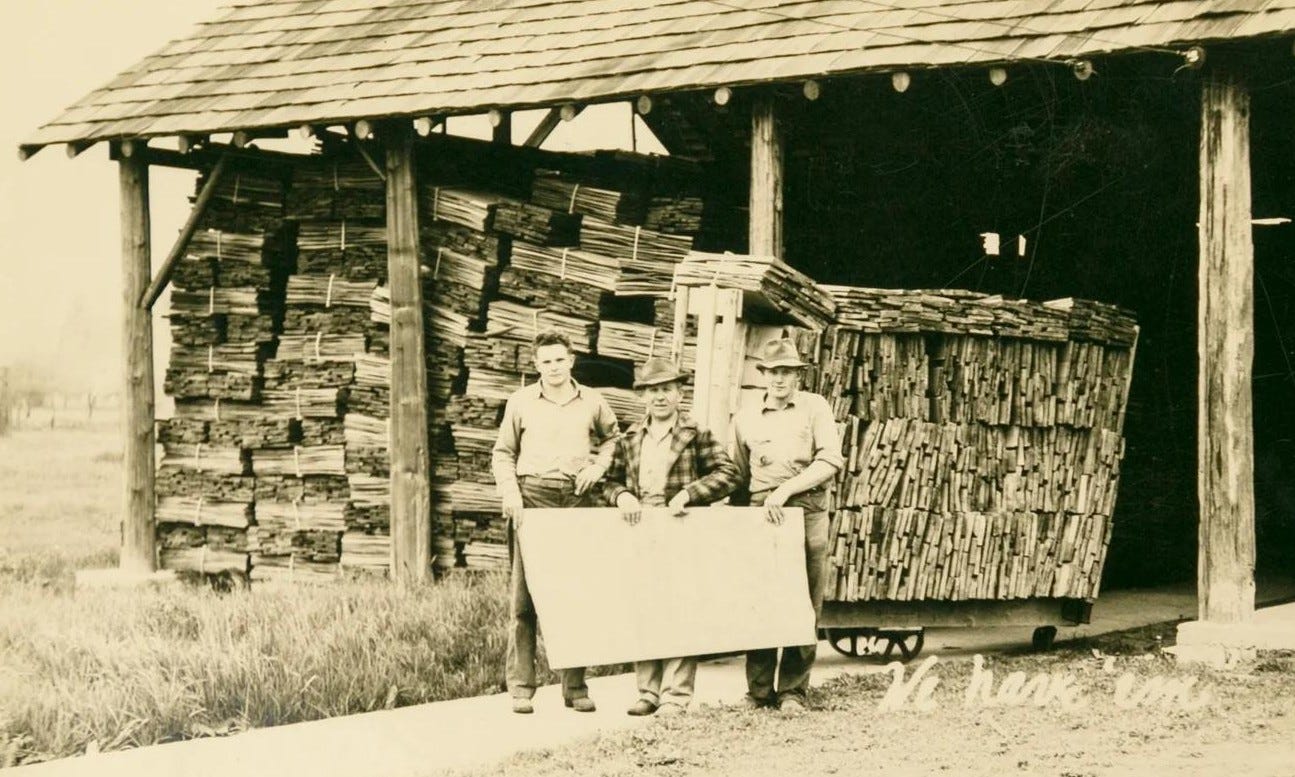
Like many businesses connected to the timber industry, the family experienced its share of challenges. During an economic downturn, Rob’s father went to work building a dam on the Baker River before eventually returning to the logging business.
On his mother’s side, his grandparents immigrated from Lebanon and established a farm in Bellevue, where they raised chickens for Seattle’s Pike Place Market. As a young girl, his mother spent her Saturdays helping her uncle sell chickens at the market.
As Rob described his family’s businesses, he kept returning to the example his parents had set in helping others.
He shared that his mother sponsored six nieces and nephews who were facing religious persecution in Lebanon, helping them come to the United States. His father, meanwhile, was known for quietly helping people in need throughout the community. Rob described both parents as people who were consistently there for their family, friends, and neighbors.
Rob also mentioned that the city named its large multi-use park Janicki Fields in recognition of his parents’ and family’s longstanding contributions to Sedro-Woolley.
These stories help explain the values Rob says have influenced him. He watched his parents build businesses and work through difficult times while making room in their lives to help others, and those experiences seem to have stayed with him.
Rob eventually attended Gonzaga University, earning degrees in mathematics and physics. He also credits his Jesuit education with further shaping his belief in service to others, something that comes up again when he talks about his involvement with community organizations.
When I asked what keeps him here, his answer was straightforward:
“What keeps me here is simple: my family, my work and the people I’ve built things with are all in this part of Washington.”
He explained that working in different communities has introduced him to people who care deeply about where they live and helped him see ways he might contribute to the causes they support.
Those connections help me understand his outlook, although family roots alone don’t establish whether someone is a good businessperson, a good neighbor, or the right partner for a project. Decisions and actions demonstrate those qualities over time. Our backgrounds do influence how we see the world, and Rob’s family history appears to have shaped his approach to both business and community involvement.
Years later, those ties would draw him back to Sedro-Woolley when his career had taken him far from home and his family asked him to return.
Coming Home and Building a Family Business
After graduating from Gonzaga University, Rob Janicki began his professional career far from the logging operations and small-town businesses he had grown up around. He went to work for Electronic Data Systems (EDS), where he trained as a systems engineer before moving into research and business consulting.
It was an interesting time to be working in technology. Personal computers were becoming increasingly common, and the concept of an interconnected world of information was beginning to take shape. Rob spent several years working with emerging technologies, including desktop computing and what was then being called the “information superhighway,” an early vision of what would become the internet.
His career eventually took him to Dallas, Texas, where he and his wife were raising their two young children. But when his father passed away from cancer at a relatively young age, Rob’s family asked him to return to Sedro-Woolley and help with the family business. He and his wife decided to come home.
That decision caught my attention. Rob had been building a career in technology and business consulting, in an industry that was changing quickly and creating opportunities around the world. When his family needed him, he returned to the timber industry and the community where he had grown up.
Coming home helped shape the direction of his working life, although his interests eventually took him well beyond logging.
Today, Rob is involved in several businesses throughout northwest Washington. Among them is The RJ Group, a Bellingham-based real estate development company he founded in 2010. According to Rob, the company has completed 1,200 housing units (including homes and apartments), along with a variety of commercial developments. His other ventures include Janicki Logging, Osprey Logistics, which operates a marine terminal at Smith Island in Everett, and Candelaria.
While the businesses span several industries, Rob describes the people behind them as a relatively small group of family members and longtime colleagues.
His four adult children now have roles in the businesses. His daughter Mollie manages finance, David manages Janicki Logging, Henry manages Osprey Logistics, and George manages real estate development.
Rob writes fondly of working with his children and the different gifts and talents each brings. Helping them develop their ideas and pursue opportunities has become part of what keeps him working, and he says it’s one reason he has no plans to retire.
“The opportunity to support their ideas and vision is what keeps me working, with no plans to retire.”
- Rob Janicki, reflecting on working with his four adult children
His business connections to Port Angeles also predate the recent discussions. Rob shared that Osprey Logistics already transports logs by barge between Port Angeles and its marine terminal in Everett. His name may be new to many people here, but at least one of his businesses has already been part of our local timber economy.
These are substantial undertakings with significant financial responsibilities. Rob is a businessman, and I see nothing inherently wrong with pursuing a profit. Successful businesses create jobs, provide services, and contribute to the economic health of the communities where they operate.
What interests me is how people approach those opportunities, especially when the work involves properties or projects that have a complicated history.
Several of Rob’s ventures involve finding potential in older industrial properties that other investors might consider too difficult or expensive to put back into use.
Some of the examples he shared also give a sense of the patience that work can require.
Finding New Purpose for Old Industrial Properties
I asked Rob what draws him to older industrial properties, especially those with environmental challenges. He described the appeal this way:
“There is great satisfaction in ‘remodeling’ something with great bones, a diamond in the rough.”
I appreciated that description. Here in Clallam County and throughout the Pacific Northwest, properties that once supported thriving industries have fallen into disuse. Some have deteriorating buildings or outdated infrastructure, while others carry contamination from decades of industrial activity. The cost and uncertainty of redeveloping them can persuade investors to look elsewhere.
Yet many of these properties already have infrastructure, transportation access, and a history of productive use. Bringing them back into service can create economic opportunities and address problems that might otherwise remain unresolved for years.
When we first spoke, Rob encouraged me to look at the industrial properties he and his family have purchased and repurposed throughout northwest Washington. He offered that history as a way to understand his approach to redevelopment, and his written answers included a few examples.
One was a former Standard Oil gas station property in Sedro-Woolley. According to Rob, contamination extended as far as 18 feet below the surface, and the cleanup process took approximately 15 years.
That is a long time to work through one property’s environmental problems. I can only imagine the patience, expense, and complications involved.
Today, Rob says, the property has been transformed into a new commercial development that includes a Starbucks, a Jersey Mike’s, and a credit union.
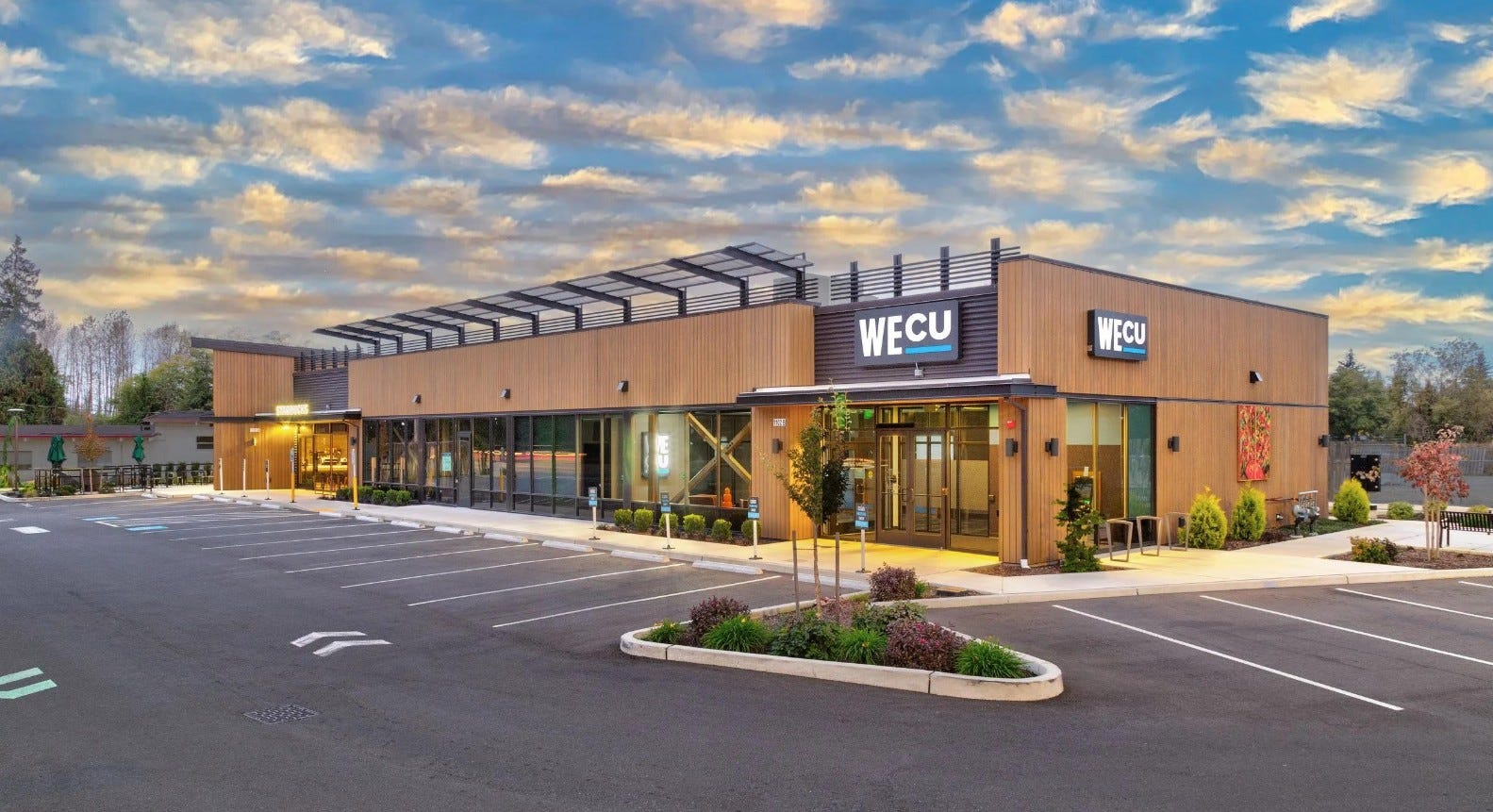
Another example was the former Scott Paper industrial yard in Hamilton, Washington. Rob shared that his family purchased the property and remediated several contaminated areas. He also described purchasing a property in Ferndale that had previously been used for dumping incinerator ash, which he later sold to the County.
These accounts don’t provide the full history of every property. Cleanup can involve property owners, regulatory agencies, contractors, and previous owners who may bear responsibility for contamination. Rob’s written answers didn’t explain all of those roles, and his description of the Ferndale property, in particular, didn’t establish what environmental work had been completed.
Still, his experience with these properties provides some context for understanding the kinds of projects he has been willing to take on.
Restoring a property that has been used, and perhaps damaged, by previous generations brings challenges different from developing vacant land. Both can be difficult, but an old industrial property may carry environmental problems that a community has struggled with for decades.
There can be substantial financial opportunities in this work. A property bought at a discount because of its condition may become considerably more valuable once its problems are addressed and it can be put back into use.
But the potential for financial success doesn’t diminish the value of addressing environmental contamination or bringing an underutilized property back into service. In the right circumstances, those interests can complement one another.
Even experienced developers can encounter problems they didn’t anticipate, however, and a promising project can become much more complicated as work progresses.
When I asked Rob about his hardest business lesson, he pointed to an experience during the financial crisis that changed how he approaches opportunities today.
Lessons Learned the Hard Way
In business, we have to contend with changing markets, unexpected expenses, and financing that can become difficult to obtain. Sometimes circumstances outside our control threaten even a promising venture.
For Rob Janicki, one of those experiences came during the financial crisis that began in 2008.
Rob explained that Horizon Bank, one of his largest lenders, failed during that period. According to Rob, the bank that took over forced him out, leaving him in a difficult financial position and requiring him to seek financing from other sources. Those alternatives came at a substantial cost.
“I had to borrow from difficult lenders at usurious rates,” he told me.
He didn’t go into the project details or explain the full circumstances, but he was clear about the lesson he took from the experience:
“Because of that, my goal now is to buy projects that can cash flow from the beginning.”
Having spent much of my own career in business, I can appreciate that lesson. A project that can generate revenue early has a different financial foundation from one that depends entirely on its future potential.
Both approaches can involve risk, but a project that produces income while longer-term plans are being developed may be better positioned to weather unexpected challenges. That doesn’t eliminate the possibility of setbacks, but it can provide some financial stability while a business works through them.
Difficult experiences can stay with us long after the immediate problems have passed.
We learn from success, but a painful setback may have an even greater influence on the decisions we make afterward.
For Rob, this experience appears to have reinforced the importance of a project’s ability to support itself financially while its longer-term potential is being developed.
That gives us some insight into his thinking, even though it doesn’t tell us everything about how he evaluates an investment or guarantee that his projects will succeed.
It also relates to whether a business can deliver lasting benefits to its community. The business generally needs to be financially sustainable, because good intentions alone don’t pay employees, maintain properties, or fund improvements.
A project’s financial success still leaves other questions to consider. Business decisions can affect surrounding communities for years, and sometimes financial opportunities pull against other priorities.
Rob described facing that balance in several community projects. One involved a place enjoyed by thousands of people in northwest Washington.
Galbraith Mountain: Finding Common Ground
Rob’s account of Galbraith Mountain near Bellingham brought that balance into focus. The forestland has an extensive trail network and draws mountain bikers, hikers, and runners from throughout the Pacific Northwest.
Thousands of people use the mountain through the year, and it has become part of the community’s outdoor recreation culture.
But Galbraith is also a working forest, and that combination of recreational use and commercial timber production has required cooperation between people with different interests.
Rob explained that Janicki Logging had managed timber harvests on Galbraith for years before his company, Galbraith Tree Farm, purchased the property in 2017. As an avid mountain biker himself, he was familiar with the trails and understood their importance to the people who used them.
In fact, he shared that his company had been working with the Whatcom Mountain Bike Coalition since 2010 to help keep the trails accessible while timber operations continued.
When he purchased the property, Rob says protecting that recreational access was an important part of his intention.
The following year, in 2018, his company entered into an agreement with the City of Bellingham and Whatcom Land Trust, selling a permanent recreation and conservation easement that protected more than 2,000 acres of forestland and up to 65 miles of trails.
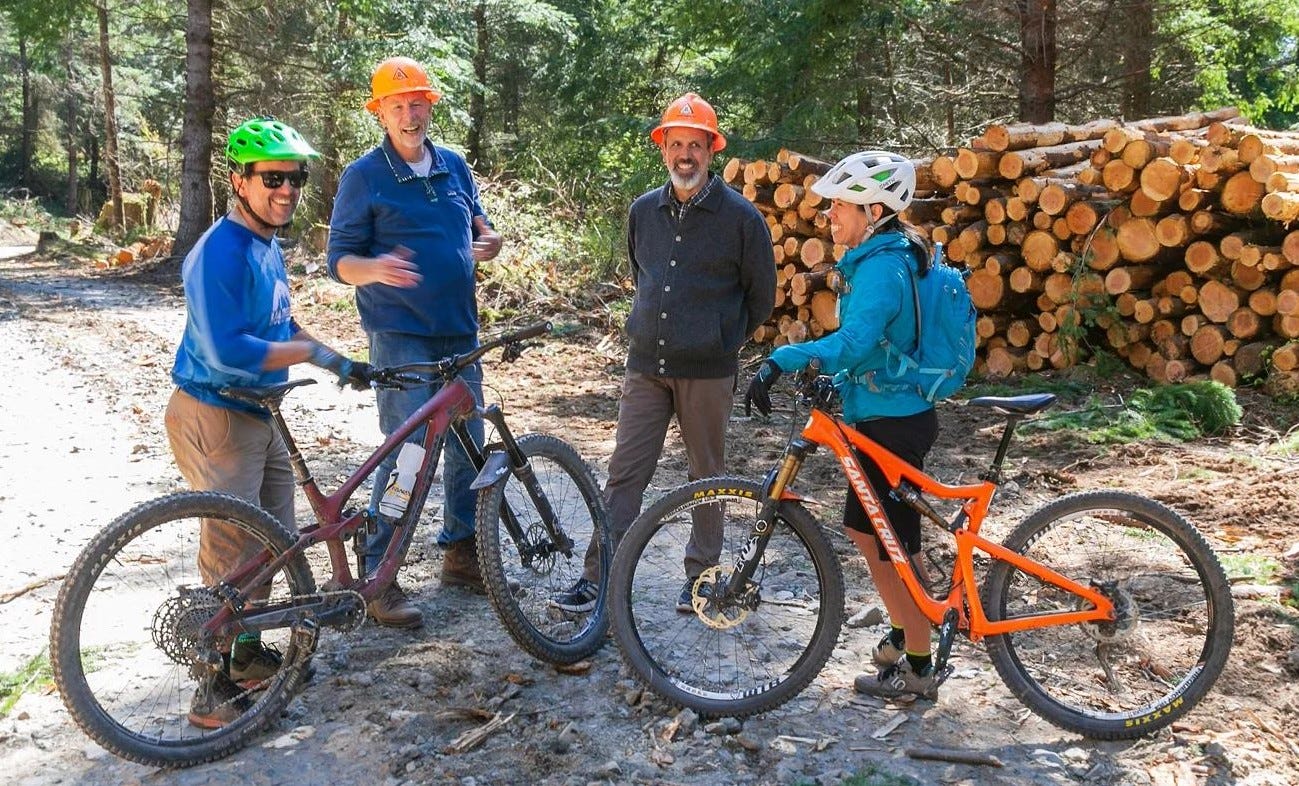
For those unfamiliar with conservation easements, they are legal agreements that place restrictions on how a property can be used, often with the goal of preserving natural resources, public access, or other important characteristics of the land. Unlike a temporary agreement that might disappear when a property changes hands, a permanent easement is intended to protect those interests for generations to come.
At Galbraith, sustainable timber harvesting could continue while the community gained lasting protections for recreation and conservation. The property could remain commercial timberland and still provide those public benefits.
The City and Whatcom Land Trust purchased the easement, compensating the landowner for accepting permanent restrictions on future uses. This wasn’t simply a donation of land or development rights, and several organizations played important roles in making it possible.
I don’t see that as diminishing what they accomplished. The agreement helps explain how a carefully structured arrangement can allow different interests to coexist.
When I asked Rob about a time when financial considerations and community interests pulled him in different directions, he returned to Galbraith.
He explained that property so close to Bellingham could potentially have been worth substantially more if developed for other purposes. By selling the permanent easement, his company gave up development rights that might otherwise have provided greater financial opportunities in the future.
“Financially, that meant walking away from the land’s highest value,” he told me.
Rob believes the decision was the right one, both for the community and for the long-term future of the property. He also shared that his company is now working with Whatcom County on a conservation easement application involving adjacent land that could otherwise face development pressure.
That effort is still underway. His interest in pursuing it suggests he sees value in continuing the approach taken at Galbraith.
We sometimes discuss economic development and environmental protection as though one must come at the expense of the other. There are real tradeoffs, and some projects won’t offer an arrangement that satisfies everyone.
At Galbraith, though, the agreement allowed a private business to keep operating while the community preserved something it values. The organizations involved found a way to respect several priorities and provide lasting benefits.
“We have a lot of autonomy and there is a lot of trust there.”
- Eric Brown, Whatcom Mountain Bike Coalition
Reaching that kind of agreement takes work. People have to recognize one another’s legitimate interests and work through disagreements while finding terms that make practical and financial sense.
Rob summarized his experience this way:
“What I learned is that a working forest and a public treasure don’t have to be at odds if everyone is willing to sit down and find the arrangement that serves both.”
That willingness to work together is part of what I hope to encourage through Clallam County Solutions. Competing interests are real, and we won’t agree on everything. But we can approach those differences with curiosity and respect, and look for places where cooperation is possible.
Galbraith shows one way Rob has approached business and community interests. He also described work involving housing, childcare, and homelessness in northwest Washington.
Building Homes and Helping People Build Better Lives
I also wanted to understand Rob’s involvement in housing, childcare, and efforts to help people experiencing homelessness.
These are issues we’re certainly familiar with here in Clallam County. Finding a home that fits within a family’s budget can be difficult, and access to childcare is often a significant challenge for working parents. Meanwhile, communities throughout our region continue to struggle with how best to help people experiencing homelessness.
Rob shared two examples of projects he has been involved with that approach these challenges in different ways.
The first is Batey Square, a development in his hometown of Sedro-Woolley.
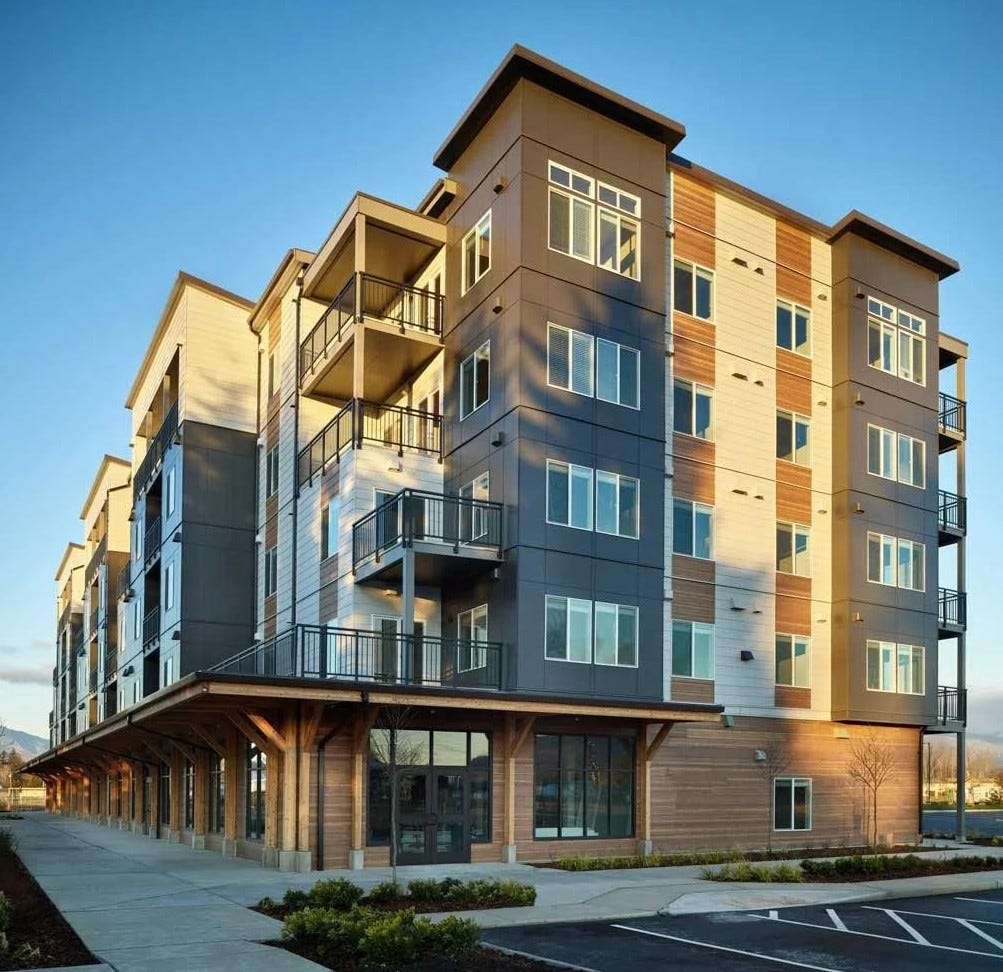
Rob explained that the project is part of a larger “urban village” concept adopted by the city in 2019 along State Route 20. His company has already developed the nearby 76-unit Depot apartment complex and the Gateway Commercial building, and Batey Square represents another phase of that effort.
The new five-story building is planned to include 157 homes and a Boys & Girls Clubs early learning center on the ground floor. The combination caught my attention.
The development will also include a plaza connecting the building to a neighboring community sports complex, creating opportunities for families to access housing, childcare, and recreational facilities within the same area.
According to Rob, the project received its building permit this past summer, and Janicki General Contracting is building it. It isn’t complete, but the plan brings several community needs together in one development.
Rob explained that Skagit County faces a significant shortage of housing, something that also creates challenges for local employers trying to attract and retain workers.
But providing housing is only part of the challenge. Families also need access to childcare, transportation, and the other services that make it possible to maintain employment and participate fully in their communities.
By incorporating an early learning center directly into a residential development, the project aims to make life a little easier for working families, particularly those with young children.
Rob shared that the mission of the Boys & Girls Clubs, “to enable all young people, especially those who need us most, to reach their full potential,” resonates with him because of the example his parents set when he was growing up.
He explained his thinking this way:
“Putting early learning right where families live means parents don’t have to choose between a decent home, a job and good care for their kids.”
I appreciate the practicality of bringing housing and childcare together. Batey Square needs to make financial sense for the people investing in it and building it, and the choices they make during development can also affect the people who eventually live there.
This approach won’t solve every challenge working families face, and we’ll have a better sense of its actual benefits once the development is finished and operating. Even so, it offers an example of thinking about how housing connects with the other parts of a family’s daily life.
The second example Rob shared was his support for Lighthouse Mission Ministries in Bellingham.
Lighthouse Mission has been serving people experiencing homelessness in the Bellingham area for more than a century. Its Christian mission focuses on helping individuals and families move toward stability, recovery, and greater independence.
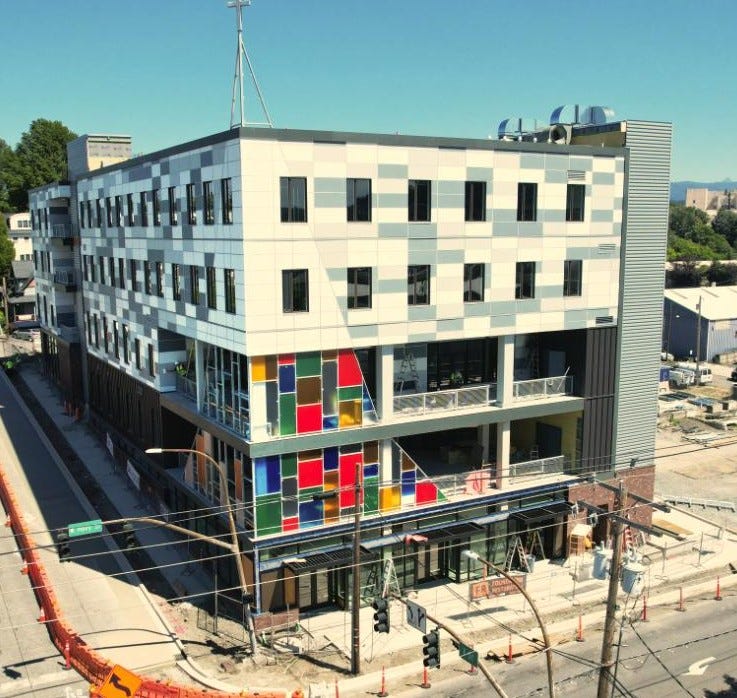
In his written answers, Rob said he was a major donor to the organization’s new building on F Street, which opened in 2024.
According to Rob, the previous shelter could no longer meet the community’s needs, and the organization was turning people away. The new facility was designed to accommodate more people and provide services to help address some of the underlying challenges contributing to homelessness.
He described a facility that added approximately 100 beds and includes family shelter accommodations, medical care, behavioral health services, and even space intended to help people develop the skills and opportunities to start their own businesses.
I wanted to understand why this organization and its approach appealed to him. His financial contribution mattered, but his reason for making it would tell me more about the work he chooses to support.
His answer brought us back to his upbringing and education.
“My faith and my Jesuit education taught me that helping someone means helping them get back on their feet, not just getting them through the night.”
His emphasis on helping people regain stability seems particularly relevant to a problem as complicated as homelessness.
Providing someone with a safe place to sleep can be an essential first step, but helping them move toward a more stable and independent life often requires much more. Healthcare, mental health support, employment opportunities, and a sense of community can all play important roles.
“The building is not the mission. The people inside it are.”
- Lighthouse Mission Ministries
People can reasonably disagree about which approaches to homelessness are most effective. I still appreciate organizations that take on the difficult work of helping people rebuild their lives, and the individuals and businesses willing to support them.
Rob’s involvement takes a different form in each of these projects. Batey Square is a business development intended to provide housing and services, while his contribution to Lighthouse Mission is personal philanthropy. Both reflect an interest in needs that extend beyond a traditional business transaction.
Throughout his answers, Rob returns to his parents, his faith, and the relationships he has developed in northwest Washington. Those themes appear in his accounts of Galbraith Mountain, older industrial properties, and organizations serving families and individuals in need.
These examples give us a fuller picture of Rob, although they don’t tell us everything about him or remove the need to consider the merits, challenges, and potential impacts of future developments. That fuller understanding was what I hoped to gain when I reached out, and I believe it can help us have more thoughtful conversations here.
Looking Beyond the Proposal
Of all the experiences Rob described, I keep returning to the story about his mother and the proposed waste transfer station in Sedro-Woolley.
He has substantial business experience and could point to many accomplishments. But when I asked about a time someone had caused him to reconsider, he chose his mother’s challenge to a project he and his brothers had supported.
I appreciate his willingness to acknowledge that someone else saw something he had overlooked. It’s a quality I value in businesspeople, public officials, and anyone taking part in decisions about their community.
His answers give us his perspective on those experiences, and I’m grateful he was willing to share it. They can’t give us a complete understanding of him. As with anyone, we learn about a person’s character through their actions over time, especially when circumstances become difficult or their decisions are challenged.
Rob pursues business opportunities expecting a return on his investment, and he has been open about that. I don’t see profitability and community benefit as inherently incompatible. Some of the most successful and lasting improvements in our communities have come from people finding ways to achieve both.
The examples Rob shared, particularly Galbraith Mountain and his work repurposing older industrial properties, help illustrate how he has approached that balance in the past. His involvement in housing, childcare, and organizations serving people experiencing homelessness adds to our understanding of what matters to him.
Whether any of those experiences will translate into similar outcomes in Port Angeles remains to be seen. That is something we should evaluate based on the merits of the opportunities presented, the commitments made, and ultimately, the results achieved.
We can appreciate past accomplishments and still recognize that future proposals need careful consideration. Legitimate concerns deserve attention, and raising them doesn’t require assuming bad intentions on the part of someone proposing a project. Economic development matters, along with environmental protections, neighborhood impacts, and the long-term interests of our community.
“Civility is not a sign of weakness, and sincerity is always subject to proof.”
- President John F. Kennedy, Inaugural Address, January 20, 1961
I believe we’re better served by staying curious and willing to learn about the people involved as these conversations unfold.
Rob and I haven’t yet had the opportunity to sit down for the longer conversation we originally planned, and there are still questions about the proposed redevelopment that we haven’t had a chance to explore. I hope we’ll have the opportunity to revisit those questions when circumstances allow.
I’m grateful that Rob took the time to share his personal history, the experiences that have influenced his business decisions, and the community projects that matter to him.
The City’s work on data center regulations will continue through its established public process, and those decisions deserve to be considered on their own merits, independently of anyone’s personal impressions of a prospective developer. My interest in writing this article came from a different place. I was curious about someone whose name had become part of an important conversation in our community, and I wanted to learn more about him. I thought others might appreciate that opportunity as well, regardless of how they feel about data centers or the proposed development.
I’ve learned a little more about his family, his businesses, the challenges he has faced, and the ways he has chosen to contribute to the communities where he lives and works. I appreciate having that context, and I hope others find it useful as well.
Perhaps the most valuable lesson from this conversation is the one Rob says he learned from his mother: sometimes the people who see things differently from us have something important to teach us.
That’s a lesson worth remembering, regardless of where we stand on any particular issue.
And it’s the kind of understanding I hope we can continue building together here in Clallam County.
Active dialogue and engagement with our readers is crucial. Writers on this platform are encouraged—and expected—to revisit their articles regularly, responding thoughtfully to readers’ questions and concerns.
We want conversations, not shouting matches. Therefore, comments will be reviewed regularly and are expected to adhere to these foundational guidelines:
Stay on Topic: Comments must relate directly to the article.
Respectfulness: Every comment should demonstrate respect toward authors, website management, and fellow commenters. Bullying, name-calling, or disrespectful behaviors will not be tolerated.
Constructive Dialogue: Political grandstanding is unwelcome here. While some discussions naturally involve political elements, the goal is to enhance understanding, clarify perspectives, and contribute constructively.
No Personal Attacks: As Theodore Roosevelt wisely said, it’s the person who is “actually in the arena” who deserves our respect. Criticism is welcome, but personal attacks are not.
Transparency: Any new guidelines needed as this platform evolves will prioritize civility, decency, and productive dialogue.
First, I want to thank Danny for taking the initiative to interview Rob Janicki and share a much more personal perspective on the man behind the proposed redevelopment of the former BioPappel/McKinley mill property.
I found this article both informative and refreshing. So much of our recent public discussion has focused on the potential risks of a relatively small data center that we’ve spent very little time understanding the people who might actually be responsible for bringing this 70-acre industrial property back to productive use.
What struck me about Rob Janicki wasn’t simply his business success, although his track record is impressive. It was the combination of his family’s deep Pacific Northwest roots, his experience building businesses across multiple industries, and his demonstrated involvement in the communities where he operates.
We’re talking about someone whose businesses have developed approximately 1,200 housing units, operated in the timber and marine transportation industries, and taken on complicated industrial properties with significant environmental liabilities.
His involvement in protecting more than 2,000 acres of Galbraith Mountain for recreation and conservation, his support for housing and childcare, and his philanthropic contributions to organizations serving people experiencing homelessness all suggest someone who understands that business success and community well-being don’t have to be mutually exclusive.
IMPORTANTLY, here’s something else I think our community should consider: Compare what we’ve learned about Rob Janicki with what we know about the companies that currently own or previously operated some of our most important industrial properties.
What do we know about the leadership, community values, or long-term commitments of Bio Pappel and McKinley, or Rayonier?
I personally know very little about the individuals running those companies. And based on what I’ve observed over the years, I haven’t seen much that demonstrates the same kind of personal engagement with our community that Rob Janicki is showing.
I believe it’s fair to ask: What have these companies done to demonstrate a lasting commitment to Port Angeles, and how does that compare with the track record of someone now expressing interest in investing here?
Of course, none of this means Rob Janicki deserves a free pass. His redevelopment proposals should be evaluated rigorously, with appropriate environmental protections, safeguards for utility ratepayers, enforceable commitments, and accountability for delivering what is promised.
I’ve consistently advocated for precisely those protections.
But there’s an enormous difference between reasonable scrutiny of a proposed investment and creating an environment where anyone willing to take on a difficult industrial redevelopment is treated with suspicion before they’ve even had the opportunity to explain their vision.
We should judge prospective investors by their track records, their transparency, their willingness to engage with the community, and ultimately their actions—not simply by assumptions about their motives.
But I also believe we should acknowledge something positive when we see it.
Here’s an experienced Northwest businessman with a history of building businesses, redeveloping difficult properties, and supporting community initiatives who is willing to put his name, reputation, and experience before the public.
That doesn’t guarantee success in Port Angeles. But it certainly deserves serious consideration.
Thank you again, Danny, for arranging this interview and encouraging a more informed, thoughtful conversation. I especially appreciate Rob’s willingness to share his background, values, and experiences directly with our community.
Whether or not the Candelaria redevelopment ultimately moves forward, I hope this is the beginning of more meaningful engagement between prospective investors and the people of Port Angeles.
We can demand accountability, protect our community’s interests, and still welcome people who want to help build a better economic future.
Those objectives are not mutually exclusive.
Well done Danny! I have lots of questions about the proposed project in PA. It's nice to learn about where he comes from and what drives him. I can tell he is not a developer that will cut and run when the going gets tough. To me he needs to work harder at explaining his project in it's entirety. The data center is the most controversial for sure. The public has so many concerns regarding this issue. I will decide when I hear more answers to the questions that are being asked. Power usage, noise polllution, effects on wildlife, how the cooling system works, and probably most importantly - jobs. IMO he needs a better PR team.