


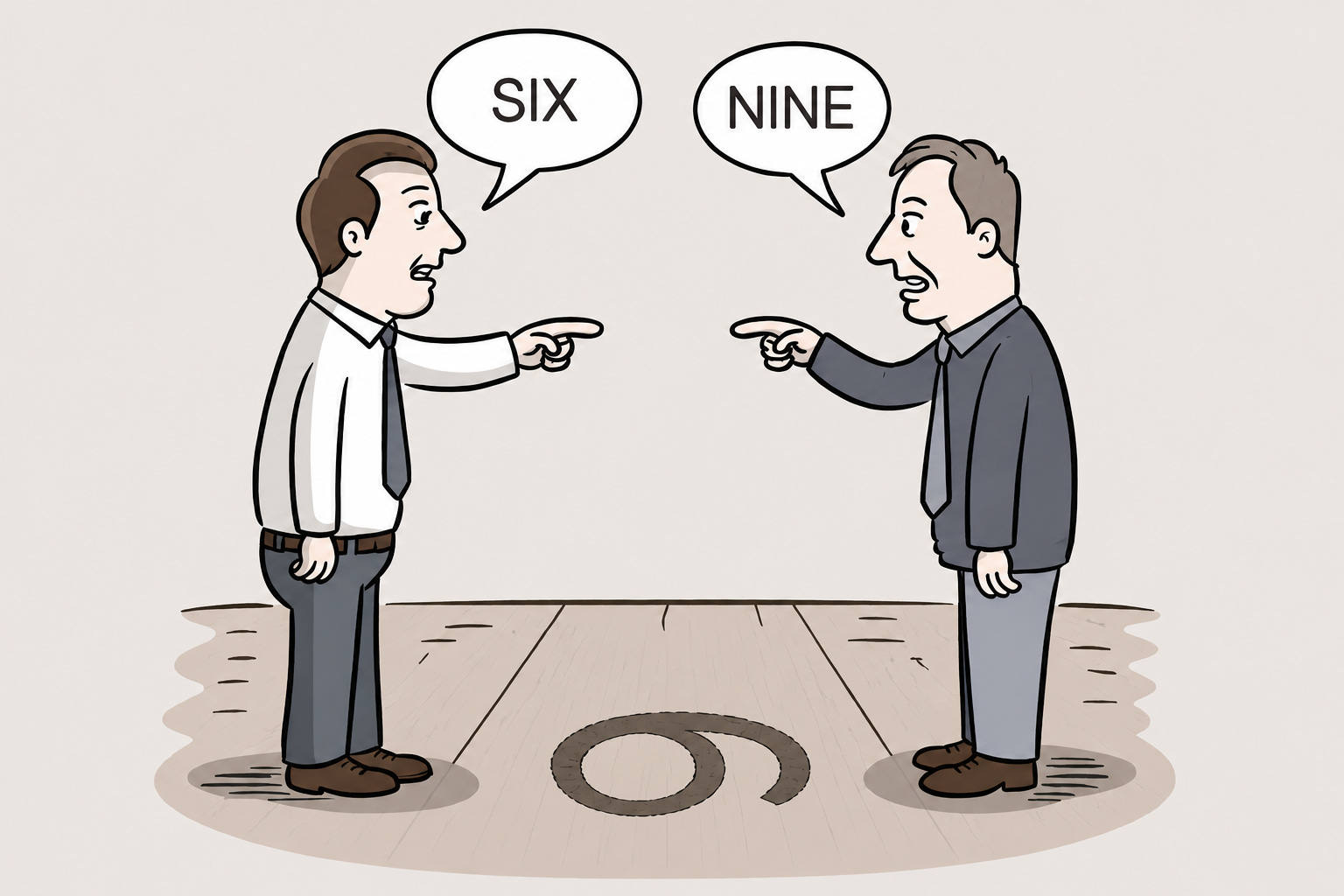
Two people stand on opposite sides of a symbol painted on the ground. One looks down and sees a 6. The other looks from the opposite direction and sees a 9. Each person is confident. Each person is looking at the same thing. Each person is telling the truth as they see it.
That image gets shared often because it captures something real about human perspective. Where we stand shapes what we see. Our experiences matter. Our fears, hopes, frustrations, relationships, and responsibilities all affect how we interpret the world in front of us.
There is wisdom in remembering that.
But there is also a danger if we stop there.
The lesson cannot simply be that everyone gets their own truth. If the symbol was intentionally painted as a 6, one person is seeing it from the intended direction and the other is not. If it was intentionally painted as a 9, the reverse is true. Context is key. The person who painted it may know what it was meant to be. And if both people are willing to move from where they are standing, they may discover more than either could see from one position alone.
A perspective can be honest and still incomplete.
That distinction is important, especially in a community like ours.
Clallam County is full of people who care deeply about this place. People care about their families, neighborhoods, businesses, employees, public spaces, natural resources, downtowns, and neighbors who are struggling. People care about safety. People care about compassion. People care about opportunity. People care about preserving what makes this place beautiful and livable.
But caring deeply does not mean we always see clearly.
In fact, the more deeply we care, the easier it can be to see only the part of the issue that touches our own experience most directly. A business owner may see the cost of vandalism, theft, or public disorder before seeing the personal history of the person causing harm. An advocate may see trauma, poverty, addiction, or mental illness before fully seeing the exhaustion of the worker cleaning up the damage. A taxpayer may see waste before seeing unmet need. A public servant may see legal constraints before seeing how distant those explanations can feel to the people affected.
Those perspectives are not meaningless. They are not obstacles to the truth. They are often pieces of it.
But they are pieces.
We do not get our own truth. But we do need each other’s perspectives.
That may sound simple, but it is difficult work. It requires humility, because none of us sees the whole picture from one place. It requires curiosity, because the person across from us may know something we do not. It requires discernment, because not every claim is accurate, not every assumption is fair, and not every solution is wise. And it requires restraint, because one of the easiest things in public life is to turn disagreement into accusation.
We are all vulnerable to that temptation.
The pull toward sides is not limited to one political party, ideology, generation, institution, or type of person. It is part of being human. We want belonging. We want certainty. We want to believe the people we trust are seeing things honestly. When an issue feels urgent or moral, it becomes very easy to confuse loyalty to our side with loyalty to what is true.
Elected officials can fall into this. So can activists, business owners, nonprofit leaders, online commenters, and ordinary residents trying to make sense of complicated issues. I can fall into it too. We all can.
Tribal thinking often feels like clarity from the inside. It tells us who is right, who is wrong, who cares, who does not, who should be trusted, and who should be dismissed. It can be comforting because it reduces complexity. It can also be dangerous because it narrows what we are willing to see.
Once we have chosen a side, we may begin accepting weak arguments from people who agree with us while rejecting strong arguments from people who do not. We may excuse behavior from our own group that we would condemn in someone else. We may repeat claims because they are useful, not because we have checked whether they are true. We may begin to believe that a good idea is only good if it comes from the right people.
That is not discernment. That is identity protecting itself.
And when that happens, local problem-solving suffers.
When Certainty Closes the Door
The damage does not usually begin with cruelty. More often, it begins with certainty.
We hear an argument we disagree with, and instead of asking what concern might be underneath it, we assume we already know. Someone raises an objection to a program we support, and we decide they must not care about the people the program is meant to help. Someone supports a policy we believe will cause harm, and we assume they are indifferent to the consequences.
Someone talks about public safety, and we hear a lack of compassion. Someone talks about compassion, and we hear a lack of accountability.
Sometimes those concerns are fair. Words matter. Policies have consequences. Power should be questioned. Public decisions deserve scrutiny. We should not pretend every argument is made in good faith, every claim is accurate, or every proposal is wise.
But there is a difference between asking hard questions and assuming the worst.
One of the most damaging habits in public life is the temptation to turn disagreement into indictment. We move too quickly from “I think this person is wrong” to “this person does not care.” From “I believe this policy will fail” to “they want failure.” From “I think this decision will cause harm” to “they are choosing harm on purpose.”
That may feel satisfying in the moment. It may rally people who already agree with us. It may make our own position feel morally clearer. But it also closes the door to understanding. Once we decide that the person across from us is not merely mistaken, but malicious, there is very little left to discuss.
And yet, in my experience, most people involved in local debates are not trying to harm the community.
Most people are trying to protect something they believe matters.
A business owner frustrated by public disorder may be trying to protect employees, customers, property, and the ability to keep the doors open. A service provider working with people living outside may be trying to protect human dignity, survival, and the possibility of recovery. A taxpayer questioning a public expense may be trying to protect accountability. A public official supporting that expense may be trying to solve a problem or meet a responsibility that is not obvious from the outside.
This does not mean everyone is equally right. It does not mean every concern should carry the same weight. It does not mean good intentions erase bad outcomes. And it certainly does not mean we should avoid accountability.
It means we should be careful.
Often, the disagreement is not whether people want to help. The disagreement is what help requires.
That is a harder conversation, but it is also a more useful one. It asks us to move beyond accusation and into examination. What problem are we trying to solve? Who is being harmed now? Who might be harmed by the proposed solution? What facts do we actually have? What assumptions are we making? What tradeoffs are we willing to acknowledge? What would success look like, and how would we know if we were wrong?
Those questions do not weaken conviction. They strengthen it.
A community that asks better questions is not a community without values. It is a community taking its values seriously enough to test them against reality. Compassion should be tested by whether it actually helps people heal, stabilize, and move toward a better life. Accountability should be tested by whether it protects the public, changes behavior, and upholds human dignity. Economic development should be tested by whether it creates lasting local value, not just short-term activity. Environmental stewardship should be tested by whether it protects what we love while still allowing people to live, work, and thrive here.
This is where humility matters.
Humility does not mean abandoning what we believe. It does not mean pretending every idea is equally good or every claim is equally true. It does not mean staying quiet when something is wrong.
Humility means being honest enough to admit that our first reaction may not be our wisest one. It means recognizing that our side may have blind spots. It means understanding that a person can disagree with us and still be acting from sincere concern. It means being willing to ask, “What am I missing?” before we ask, “How do I win?”
That kind of humility is not weakness. It is discipline.
It is also one of the only ways a community can keep learning together.
Curiosity Is How We Keep Learning
Humility opens the door, but curiosity helps us walk through it.
It is one thing to admit that we might be missing something. It is another thing to actually go looking for what that might be.
Curiosity does not mean we have no convictions. It does not mean we stop caring about right and wrong, or that we treat every idea as equally wise. It does not mean we give harmful behavior a pass or pretend serious consequences are merely differences of opinion.
Curiosity means we are willing to understand before we dismiss.
That can be difficult, especially when the issue feels personal. When we are worried about our neighborhood, our business, our children, our employees, our safety, our taxes, our environment, or our future, curiosity may not come naturally. We may want answers quickly. We may want someone to blame. We may want the comfort of knowing exactly who is right and who is wrong.
But complicated problems rarely reward quick certainty.
In Clallam County, many of our hardest issues sit at the intersection of competing goods. We want compassion, and we want accountability. We want economic opportunity, and we want to protect the character and natural beauty of this place. We want responsive government, and we want fiscal responsibility. We want public safety, and we want people who are struggling to have a real chance at recovery.
Those are not small tensions. They are real ones.
Curiosity helps us stay in those tensions long enough to learn something useful.
Instead of asking only, “How do I prove my point?” curiosity asks, “What problem is this person trying to solve?” Instead of asking, “Why do they not care?” curiosity asks, “What are they trying to protect?” Instead of asking, “How can anyone think that?” curiosity asks, “What experience might have led them to see it that way?”
Those questions do not require agreement. They require patience.
They also change the quality of the conversation. A person who feels attacked will usually defend. A person who feels mocked will usually withdraw or strike back. A person who feels heard may still disagree, but there is a better chance that they will keep talking honestly.
That is critical because good solutions often begin with better information.
A business owner may know where a policy is failing on the ground. A service provider may know which barriers keep people from getting help. A police officer may know what situations repeat night after night. A teacher may know what families are carrying before anyone else sees it. An employer may know what makes it hard to find and keep workers. A person living through homelessness, addiction, poverty, or mental illness may know what our systems look like from the inside.
None of those perspectives is the whole truth by itself. Each can still be incomplete. Each can still be shaped by frustration, fear, hope, or limited information.
But if we refuse to listen, we guarantee that our own picture stays incomplete too.
Curiosity also requires us to challenge our own side. That may be the hardest part.
It is easy to question the assumptions of people we already disagree with. It is much harder to question the assumptions that make us feel righteous, loyal, or safe. But if a good idea only sounds good when our side says it, we are not thinking clearly enough. If a bad argument only bothers us when the other side uses it, we are not being honest enough. If we require perfect motives from our opponents but excuse carelessness from our allies, we are not seeking truth. We are protecting identity.
A healthier community asks more of itself.
Before we repeat a claim, we can ask whether we know it is true. Before we condemn a decision, we can ask what constraints shaped it. Before we defend a policy, we can ask who may be harmed by it. Before we dismiss a concern, we can ask what part of it may be legitimate. Before we assume bad intent, we can ask what sincere concern might be underneath.
Curiosity does not solve everything. It will not make every disagreement disappear. It will not turn every conversation into consensus. Some claims will still be false. Some proposals will still be unworkable. Some behavior will still need to be confronted. Some decisions will still require hard lines.
But curiosity can keep us from becoming careless with one another.
And in a community small enough that today’s opponent may be tomorrow’s partner, neighbor, customer, volunteer, coworker, or public servant, that is not a small thing.
When Facts Become Partisan
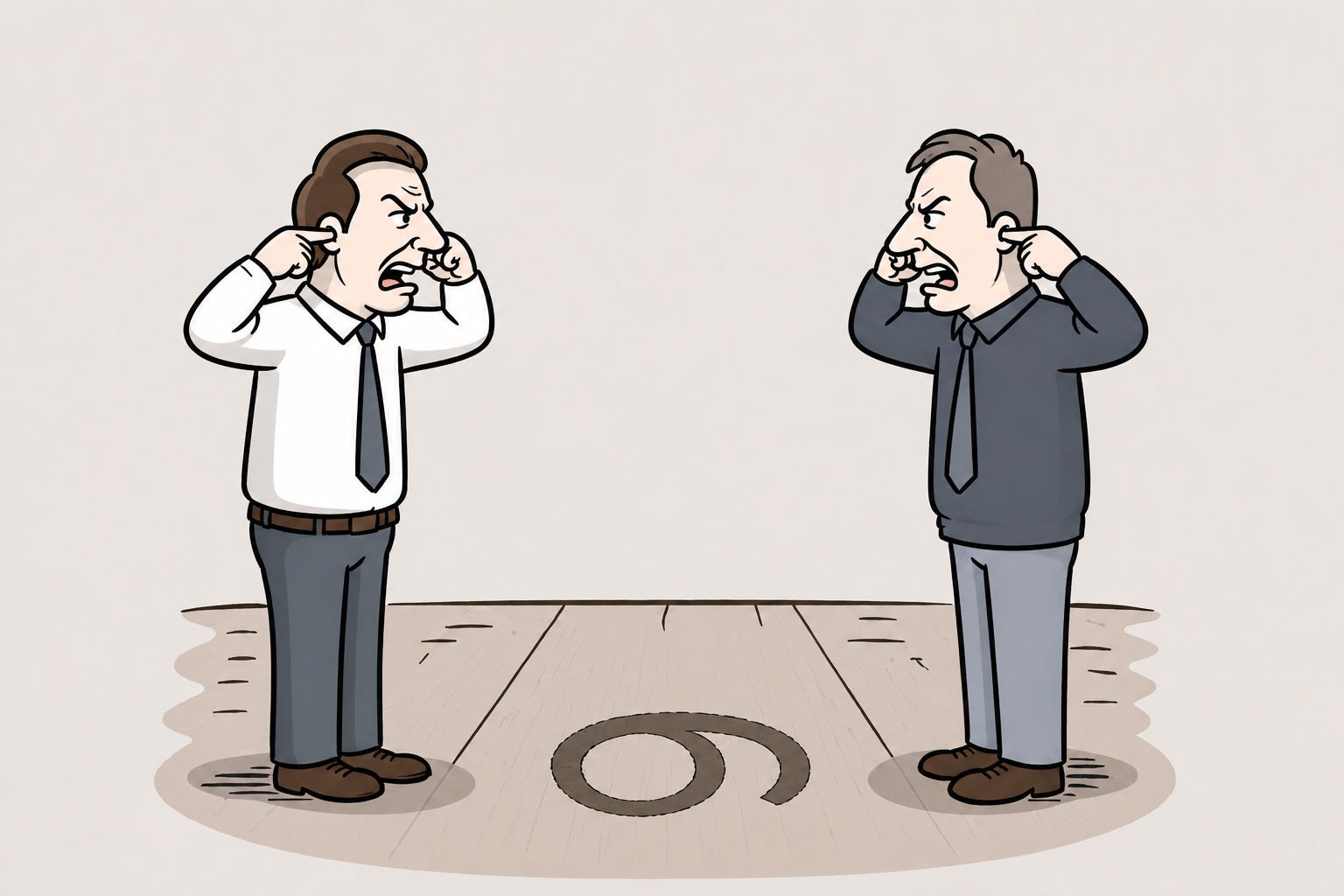
Curiosity helps us listen. Discernment helps us sort through what we hear.
Listening well does not mean believing everything. A healthy community needs open ears, but it also needs clear eyes. Not every claim is true. Not every statistic is being used fairly. Not every story represents the whole picture. Not every confident statement has been checked. Not every rumor deserves to be repeated.
This is one of the harder parts of public conversation today. Even facts can start to feel partisan.
A number gets shared, and before we ask whether it is accurate, we ask whose argument it helps. A report comes out, and before we read it carefully, we look for whether it confirms what we already believed. A person tells a story, and before we consider what it reveals, we decide whether that person belongs to the side we trust. A public official explains a decision, and before we weigh the reasoning, we filter it through what we already think of that official.
When that happens, truth-seeking becomes team sport.
That is dangerous for any community, but especially for a smaller community like ours. Clallam County cannot solve complicated problems if we cannot describe reality with some measure of honesty together. We may still disagree about values, priorities, tradeoffs, and solutions. That is normal. But if we cannot even have a shared conversation about what is happening, who is affected, what is working, what is failing, and what evidence we have, then we are left with competing narratives instead of community problem-solving.
Facts do not become unimportant because they are inconvenient. They do not become true because they help our preferred argument. They do not become false because someone we dislike said them out loud.
At the same time, facts rarely interpret themselves.
A budget number may be accurate, but people may disagree about whether it reflects wise investment or misplaced priorities. A crime statistic may be accurate, but people may disagree about what is driving it or what response would help. A personal story may be true, but people may disagree about what policy lesson should be drawn from it.
That is why we need to slow down and separate a few things that often get blended together.
What do we actually know? What are we assuming? What are we interpreting? What do we value? What are we afraid of? What outcome are we trying to produce?
Those questions matter because many public arguments are not only disagreements over facts. They are disagreements over meaning, priorities, risk, and which harms feel most visible.
If we do not understand that, we may keep arguing past each other.
One person may be talking about public safety while another is talking about human dignity. One person may be talking about fiscal responsibility while another is talking about unmet need. One person may be talking about environmental protection while another is talking about jobs, infrastructure, or the cost of living.
Often both are naming something real.
The work is not to pretend those tensions are easy. The work is to be honest enough to name them clearly.
Discernment also asks us to be careful with the information we share. In a small community, a claim can travel quickly. A partial truth can harden into public belief. A misunderstood decision can become evidence of corruption. A single story can become a symbol for an entire group of people. A rumor can damage trust long before anyone checks whether it was true.
That does not mean we should become afraid to speak. Silence is not the goal. Honest public conversation matters. Criticism matters. Accountability matters.
But if we are going to speak strongly, we should also take care to speak accurately.
Before we share the claim, repeat the story, accuse the official, defend the program, condemn the neighbor, or dismiss the concern, we can pause long enough to ask: Is this true? Is it complete? How would I know? What context might be missing? Am I holding my own side to the same standard I expect from others?
Those are not perfect safeguards. But they are better than letting our instincts do all the work.
Partisanship becomes dangerous when loyalty to a side becomes stronger than loyalty to what is true. That can happen on the right, on the left, and anywhere people gather around identity more tightly than reality. It can happen whenever belonging becomes more important than honesty.
A community serious about solutions needs a different habit.
We need to be willing to accept true information even when it complicates our argument. We need to be willing to reject false information even when it would help our side. We need to be willing to revise our views when the evidence changes. We need to be willing to say, “I do not know enough yet,” even when certainty would feel more comfortable.
That is not indecision. It is integrity.
And if we can practice that kind of discernment, then our disagreements may become more useful. Not easier, necessarily. Not smaller. But more honest, more grounded, and more capable of leading somewhere better.
Local Problems Do Not Fit Neatly Into Sides
This kind of discernment is so important because the issues in front of us are not simple.
Clallam County is a beautiful place, but it is not an easy place to build a life for everyone. We have small towns with deep histories, rural areas with distinct needs, natural resources that shape both our economy and our identity, and communities where people often know each other across many different roles.
That closeness can be one of our strengths. It can also make disagreement feel personal.
When national politics filters down into local issues, it often arrives with ready-made categories. One side is told what compassion should sound like. Another side is told what responsibility should sound like. One side is told who cares about workers. Another side is told who cares about taxpayers. The script is already written before the local facts are even considered.
But Clallam County’s problems do not fit neatly into those scripts.
Homelessness is not only a public safety issue, only a mental health issue, only an addiction issue, only an economic issue, or only a personal responsibility issue. It can involve all of those things at once. If we choose only one lens and refuse to look through the others, we will miss something important.
Economic development is not only about growth. It is about what kind of growth, who benefits from it, whether it creates lasting local value, whether wages can support local families, whether small businesses can survive, whether young people can stay, and whether we are strengthening the community instead of simply increasing activity.
Public safety is not only about enforcement. It is also about prevention, accountability, trust, treatment capacity, repeat behavior, victim impact, officer capacity, public spaces, and whether people feel safe enough to participate fully in community life.
Environmental stewardship is not only about saying no to harm. It is also about saying yes to responsibility, restoration, resilience, wise use, local livelihoods, and the long-term health of the place we love.
These issues are interconnected. Pull on one thread, and another moves.
That is why purely partisan thinking fails us. It tries to make complicated local realities behave like simple national arguments. It rewards the phrase that wins the room, not necessarily the solution that works on the ground. It encourages us to defend our side before we understand the whole problem. It pushes us toward certainty when what we need first is clarity.
And clarity takes work.
It takes listening to the person whose business has been damaged and the person trying to survive outside. It takes listening to the taxpayer asking where the money is going and the public servant trying to meet legal, practical, and human responsibilities with limited resources. It takes listening to the environmental advocate, the employer, the worker, the service provider, the police officer, the teacher, the parent, and the person whose life does not fit cleanly into any public comment category.
Listening to all of those perspectives will not automatically tell us what to do. It may even make the work feel harder for a while.
But it will make us more honest.
And honest is where real solutions have to begin.
Compassion and Accountability Belong Together
One of the clearest places we see this tension is in how communities talk about homelessness.
Few issues reveal our divided instincts more quickly. Some people begin with compassion. They see poverty, trauma, addiction, mental illness, disability, family breakdown, and systems that are difficult to navigate even for people with stability and support. They see human beings who are suffering and too often treated as problems to be moved rather than people to be helped.
That perspective holds real truth.
Other people begin with public safety, neighborhood impact, and the visible strain placed on businesses, workers, families, parks, trails, waterways, and public spaces. They see theft, threats, vandalism, fires, dumping, human waste, drug activity, environmental damage, and repeated behavior that makes daily life harder for everyone nearby.
That perspective is no less true.
If we are serious about solutions, we cannot afford to dismiss either one.
Being homeless is not a crime, and it should not be treated like one. A person does not lose their dignity because they are poor, addicted, mentally ill, disabled, traumatized, or living outside. We should be very careful about language or policies that reduce people to their worst day, their most visible struggle, or the discomfort others feel around them.
At the same time, harmful conduct does not become harmless because it is connected to suffering.
Theft is still theft. Assault is still assault. Threats are still threats. Fires are still dangerous. Vandalism still has victims. Human waste and needles still create public health concerns. Environmental damage still matters. Workers asked to clean up the same damage again and again are still carrying a burden. Business owners who lose customers, inventory, sleep, and money are not being selfish when they say the situation is not sustainable.
There is a difference between criminalizing a person’s status and responding to harmful conduct.
We need to hold that distinction clearly. If we cannot, the conversation quickly breaks down. People who emphasize compassion may hear every call for accountability as cruelty. People who emphasize accountability may hear every call for services as excuse-making. Both reactions are understandable. Neither is enough.
Compassion without accountability can become enabling. Accountability without compassion can become cruelty. A healthy community needs both.
That does not make the work easy. In fact, it makes the work harder because it requires more than slogans. It requires help and boundaries. Outreach and enforcement. Treatment and consequences. Patience and urgency. Individual responsibility and community responsibility. A willingness to protect vulnerable people and a willingness to protect everyone else who is affected.
Those are not competing moral concerns. They are connected.
A person living outside may need help that is consistent, humane, and realistic. A business owner dealing with repeated damage may need a response that is timely, fair, and effective. A police officer may need tools that do more than move a problem from one block to another. A service provider may need resources, coordination, and clear expectations. A neighborhood may need reassurance that compassion will not mean abandonment.
No single perspective contains all of that.
This is why local conversations about homelessness become so unproductive when we force people into camps.
If someone talks about public safety, it does not automatically mean they lack compassion. If someone talks about dignity, it does not automatically mean they are ignoring harm. If someone questions whether a program is working, it does not automatically mean they want people to suffer. If someone asks for enforcement, it does not automatically mean they want to criminalize poverty.
It may mean they are looking at a different part of the same problem.
That does not mean every concern is fair or every proposed response is wise. Some ideas really would cause harm. Some language really does dehumanize. Some policies really do fail. Some programs really do need more accountability. Some behaviors really do require a firmer response.
But we will not sort those things out honestly if we begin by assuming that only one side cares.
The better question is not, “Are you compassionate or are you serious about public safety?”
The better question is, “What would it take to build a community where people are helped before they fall further, held accountable when they harm others, and given a real pathway toward stability?”
That question is harder to answer. It is also much more likely to lead somewhere useful.
The Question Is What Actually Helps
The same discipline matters beyond homelessness.
Whether we are talking about economic development, public safety, workforce needs, blighted properties, addiction, mental health, environmental stewardship, or the future of our downtowns, the most useful question is rarely, “Which side does this idea belong to?”
The better question is, “What actually helps?”
That sounds obvious, but it is harder than it seems. Many ideas arrive carrying political baggage before they are ever examined on their own merits. A proposal can be dismissed because it sounds too progressive, too conservative, too business-friendly, too government-driven, too idealistic, too strict, too soft, too expensive, or too disruptive.
Sometimes those concerns are valid. Sometimes they are warning signs worth taking seriously.
But sometimes they are shortcuts.
They allow us to react before we understand. They let us decide whether an idea is acceptable based on who supports it, who opposes it, or what political category it seems to fit. And once an idea is assigned to a side, many people stop examining whether it might contain something useful.
That is a costly habit for a community.
Clallam County needs practical solutions more than it needs ideological purity.
We need ideas that can work in the real world, with real budgets, real people, real limitations, and real consequences. We need enough compassion to care who is being left behind, enough accountability to ask whether our efforts are producing results, enough creativity to try new approaches, and enough humility to admit when something is not working.
That should be true no matter where an idea comes from.
If a conservative idea helps people stabilize, improves public safety, protects taxpayers, or strengthens local families, we should be willing to consider it. If a progressive idea expands opportunity, reduces harm, improves access to services, or helps people move toward stability, we should be willing to consider it. If a business leader, nonprofit worker, public employee, neighborhood advocate, faith community, tribal leader, labor voice, environmental advocate, or person with lived experience brings forward a useful insight, we should be willing to listen.
Not uncritically. But honestly.
Good ideas do not become bad because they come from someone outside our usual circle. Bad ideas do not become good because they come from someone on our side.
That may be one of the hardest disciplines in public life right now. We are often trained to ask, “Who said it?” before we ask, “Is it true?” We ask, “Does this help my argument?” before we ask, “Does this help the community?” We ask, “Will my side approve?” before we ask, “What outcome will this produce?”
But if a good idea only sounds good when our side says it, we are not thinking clearly enough.
A community serious about solutions has to be willing to borrow wisdom from wherever it can be found. That does not mean becoming politically vague or morally indifferent. It means being grounded enough in our values that we are not afraid to test ideas honestly.
For example, when we talk about economic development, the question should not be whether we are for business or against business, for growth or against growth, for regulation or against regulation. Those categories are too small. The better question is whether we are creating lasting local value.
Are we helping people earn enough to live here? Are we supporting small businesses that invest in the community? Are we preparing young people for real career pathways? Are we making it easier to turn neglected properties into productive places? Are we protecting the natural beauty and resources that make this area special? Are we building an economy that serves the community, rather than a community that merely serves the economy?
Those questions do not belong to one party.
They belong to all of us.
The same is true when we talk about public safety. The question is not whether we care more about enforcement or compassion. The question is whether our response reduces harm, protects people, changes behavior, and creates a path toward something better. The same is true when we talk about blighted properties. The question is not whether we are punishing property owners or tolerating decline. The question is how we restore value, safety, dignity, and possibility in places that have been allowed to deteriorate.
Real solutions usually require more than one instinct at a time.
They require urgency and patience. Compassion and accountability. Private initiative and public responsibility. Personal ownership and community support. Clear boundaries and second chances. Stewardship and opportunity. Hope and follow-through.
That is why tribal thinking is so limiting. It often gives us only half of what we need.
One side may be better at naming certain harms. Another side may be better at naming certain responsibilities. One side may see the urgency of protecting vulnerable people. Another may see the urgency of protecting public order. One side may see the danger of economic stagnation. Another may see the human cost of poorly designed action.
A wise community does not have to accept every answer offered by every side.
But it should be willing to ask what each perspective can teach us.
That is how we move from defending positions to solving problems. We stop asking only whether an idea feels familiar, comfortable, or politically safe. We start asking whether it is honest, workable, humane, and likely to help.
That does not guarantee agreement.
But it gives us a better disagreement. One rooted less in identity and more in reality. One where people can challenge each other without dismissing each other. One where we are allowed to say, “That part makes sense,” even when we do not accept the whole argument.
That may not sound dramatic. But in a divided time, it is quietly powerful.
It is also how communities get better.
Better Leadership, Better Citizenship
If we want better local problem-solving, responsibility has to be shared.
It is easy to put that responsibility entirely on elected officials, public agencies, nonprofits, business leaders, or whoever happens to be closest to the decision. And to be clear, leaders do carry a real obligation. When someone holds public trust, manages public dollars, serves vulnerable people, shapes policy, owns property, employs others, or influences community opinion, they should expect scrutiny.
That is healthy.
Local leadership should be transparent, honest about tradeoffs, willing to explain decisions, and humble enough to admit when something is uncertain or not working. Leaders should not hide behind talking points when people are asking fair questions. They should not dismiss public concern simply because it is inconvenient, emotional, or uncomfortable. They should not ask for trust while avoiding accountability.
But the public has responsibilities too.
Citizens have every right to question decisions, challenge assumptions, criticize outcomes, and demand better. That is part of a healthy community. Public comment, letters, emails, conversations, and frustration can all help leaders see what they might otherwise miss.
But criticism becomes less useful when it turns into contempt.
We can ask hard questions without assuming corruption. We can challenge a decision without attacking the humanity of the people who made it. We can point out consequences without claiming that everyone involved wanted those consequences. We can demand accountability without turning every disagreement into a moral indictment.
That does not mean softening the truth.
Sometimes decisions are poor. Sometimes leaders fail to listen. Sometimes agencies become defensive. Sometimes public dollars are not used well. Sometimes programs continue too long without enough evidence that they are working. Sometimes people in authority deserve direct and sustained criticism.
But even then, the way we criticize matters.
Strong criticism can be specific, factual, and fair. It can say: here is the decision, here is the impact, here is the evidence, here is who is being harmed, here is the question that has not been answered, and here is what needs to change.
That kind of criticism can sharpen public life.
Contempt usually dulls it.
Contempt says: these people are idiots, crooks, cowards, monsters, communists, fascists, grifters, elitists, heartless, corrupt, or evil. It may feel powerful, especially when others join in. But it rarely helps us understand the problem more clearly. It rarely persuades anyone who is not already convinced. It rarely builds the trust needed to solve anything after the argument is over.
And after the argument is over, we still have to live here together.
That is one of the realities of a smaller community. We may disagree fiercely in one setting and then run into each other at the grocery store, a school event, a fundraiser, a job site, a public meeting, a nonprofit project, or a volunteer cleanup. The person we criticize today may be the person we need to work with tomorrow. The person who frustrates us in one role may be serving the community faithfully in another.
That does not mean avoiding disagreement. It means refusing to let disagreement consume the whole person.
Better leadership and better citizenship reinforce each other. Leaders should earn trust through openness, humility, competence, and follow-through. The public should strengthen accountability through honesty, seriousness, and a willingness to engage in good faith whenever possible.
Neither side will do this perfectly.
There will be defensive leaders. There will be unfair critics. There will be mistakes, overreactions, half-truths, and moments when frustration gets the better of people who should know better. That is part of being human.
But if enough of us choose a better standard often enough, the tone of local conversation can change.
We can make room for hard truths without making cruelty the price of admission. We can expect accountability without treating every public servant as suspect. We can defend vulnerable people without dismissing the harms experienced by others. We can support law and order without losing sight of dignity. We can promote economic vitality without forgetting stewardship. We can protect what we love without closing ourselves off to what needs to change.
That is the work of community.
Not agreement on everything. Not silence. Not politeness at the expense of honesty.
Something better: a public culture where people can tell the truth, ask hard questions, listen across difference, and still leave room for tomorrow’s cooperation.
A Better Civic Habit
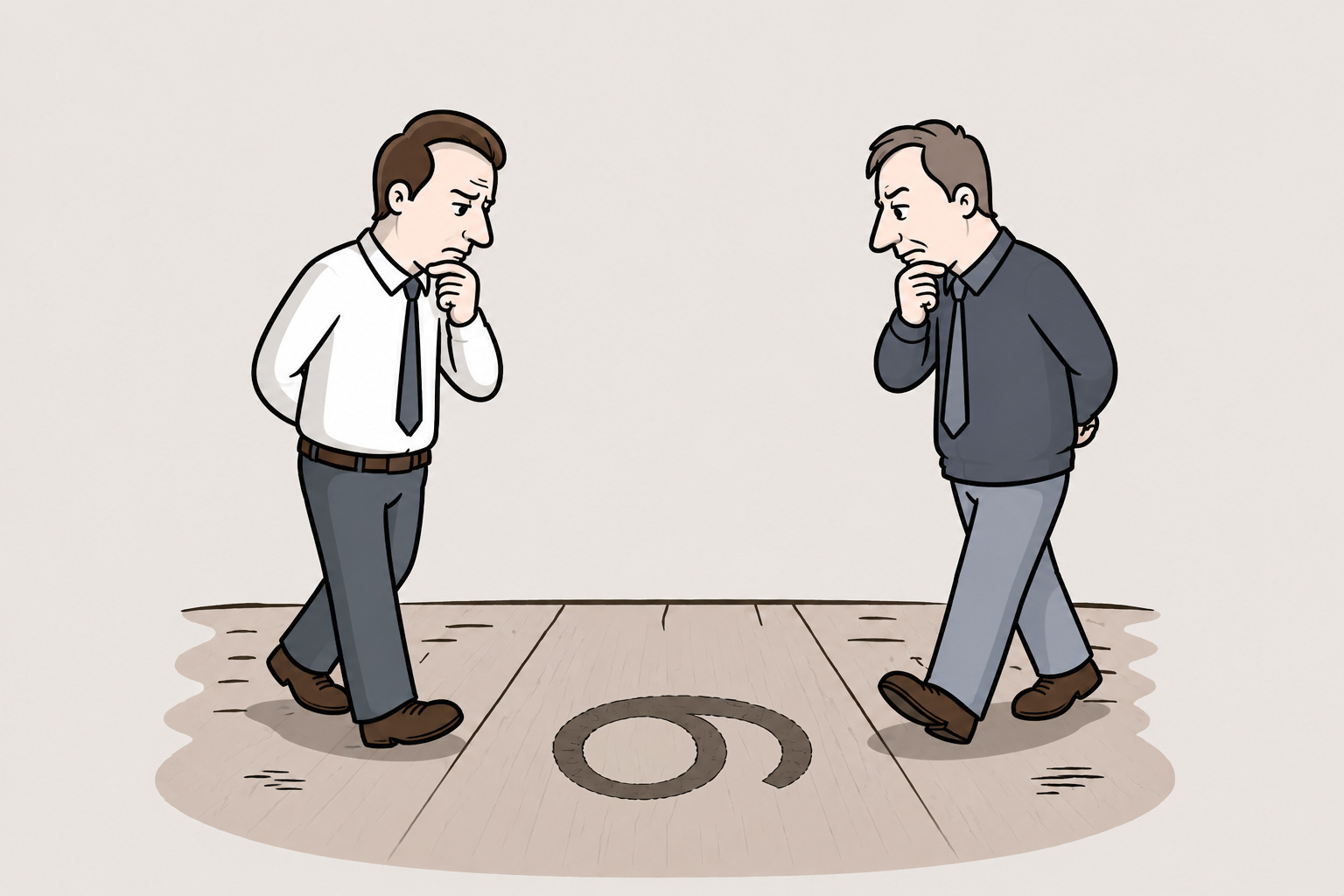
So what does this look like in practice?
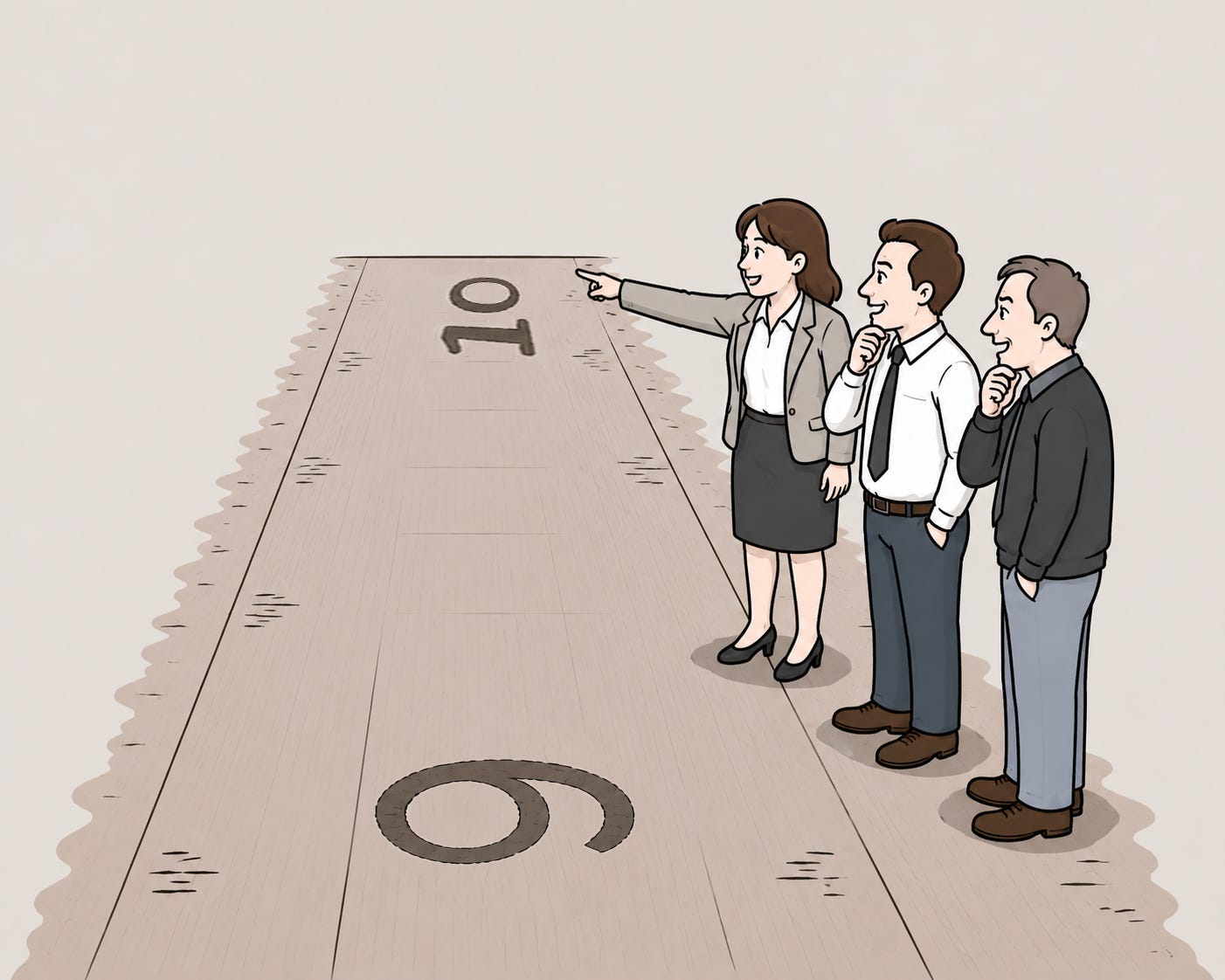
It begins with a simple habit: before we decide we have seen the whole problem, we walk around it.
That does not mean delaying forever. It does not mean refusing to take a position. It does not mean hiding behind complexity when action is needed. Some decisions have to be made. Some harms have to be addressed. Some lines have to be drawn.
But we should be careful about making decisions from one angle while pretending we have seen the whole thing.
Walking around the problem means asking better questions before settling into certainty.
What do I actually know? How do I know it? What am I assuming? Who is directly affected? Whose perspective have I not heard? What harm am I trying to prevent? What harm might my preferred solution unintentionally create? What facts would cause me to reconsider? What would success look like, not just in theory, but in real life?
Those questions are not complicated, but they can be uncomfortable. They ask us to slow down at the very moment we may want to react. They ask us to listen when we may want to argue. They ask us to test our own side’s assumptions, not just the assumptions of people we already distrust.
That is hard work.
It is much easier to stand in one place and keep insisting that the number on the ground is exactly what it looks like from where we are standing. It is easier to surround ourselves with people who see it from the same angle. It is easier to decide that anyone seeing something different must be dishonest, foolish, uncaring, or dangerous.
But if we want to solve problems, easier is not always better.
A community that walks around the problem is willing to gather more context. It listens to the person affected by harm and the person trying to prevent future harm. It listens to the person asking for compassion and the person asking for accountability. It listens to the person calling for investment and the person asking how it will be paid for.
Then it does something even harder.
It tries to tell the truth about all of it.
Not the version that flatters one side. Not the version that makes the other side look ridiculous. Not the version most likely to get applause from people who already agree. The fuller truth. The more honest truth. The truth that may require us to revise our favorite argument, soften our harshest assumption, or admit that a concern we wanted to dismiss is more legitimate than we first believed.
That kind of truth-telling is not weakness.
It is courage.
It takes courage to say, “My side may be missing something.” It takes courage to say, “That criticism is uncomfortable, but it may be fair.” It takes courage to say, “I still disagree, but I understand the concern better now.” It takes courage to say, “This solution is well-intended, but it is not working.” It takes courage to say, “This person I disagree with is not my enemy.”
And it takes courage to act after we have listened.
Walking around the problem should not become an excuse for endless study, endless meetings, or endless process. The goal is not to admire complexity. The goal is to understand enough to act more wisely.
And real solutions require follow-through.
If a program is helping, we should be willing to strengthen it. If a program is failing, we should be willing to change it. If enforcement is needed, we should be willing to say so. If services are missing, we should be willing to say that too. If a policy creates unintended harm, we should have the humility to revisit it. If an idea from someone outside our usual circle might help, we should have the courage to consider it.
The point is not to become less committed.
The point is to become more committed to what is true, what is humane, and what works.
That is the kind of local culture Clallam County needs. One where people do not have to surrender their convictions in order to listen. One where public debate is honest enough to name hard realities and generous enough to leave room for good faith. One where we are less interested in proving that our side was right from the beginning and more interested in discovering what will help our community thrive.
We may still see different things from where we stand.
But we do not have to stay standing there.
The Work of a Community Serious About Hope
We do not get our own truth.
But we do need each other’s perspectives.
That is not a contradiction. It is part of the discipline of living together in a real community, with real problems, real disagreements, real consequences, and real people affected by the choices we make.
Truth is not created by our preferred angle. It is not determined by our political identity, our social circle, our favorite news source, our frustration, our fear, or our hopes. But our angle still matters because it shapes what we notice first. It shapes what feels urgent. It shapes which harms are most visible to us and which ones we may overlook.
That is why we need one another.
Not because every opinion is equally accurate. Not because every proposal is equally wise. Not because every criticism is fair or every claim deserves the same weight. But because none of us sees everything from where we stand.
Clallam County does not need more people shouting from opposite sides of the symbol on the ground. We already have enough of that. What we need are more people willing to walk around the problem, ask better questions, test what we think we know, and listen long enough to understand what someone else may be seeing.
That does not mean agreement will come easily.
It may not come at all.
There will still be hard decisions, real tradeoffs, and moments when we have to draw firm lines. Some policies will need to be challenged. Some programs will need to be changed. Some behavior will need to be confronted. Some claims will need to be corrected. Some ideas will need to be rejected.
But we can do those things without surrendering to contempt.
We can be honest without being cruel. We can be compassionate without being naïve. We can be accountable without becoming harsh. We can be skeptical without becoming cynical. We can be firm without forgetting that the person across from us is more than the position they hold in one argument.
That is not weakness.
That is the work of a community serious about hope.
Hope is not pretending things are better than they are. Hope is not avoiding conflict, ignoring harm, or smoothing over every disagreement with polite words. Real hope is more demanding than that. It asks us to see clearly, speak truthfully, listen humbly, and keep working even when the path is complicated.
It asks us to care more about solutions than sides.
That is the invitation in front of us.
When we talk about homelessness, public safety, economic development, blighted properties, addiction, mental health, environmental stewardship, local government, or the future of our downtowns, we can keep repeating the familiar patterns. We can defend our side, assume the worst, share the claim that helps our argument, dismiss the person who complicates our view, and call that conviction.
Or we can choose a better way.
We can pause before assigning motives. We can ask whether our facts are complete. We can look for the sincere concern underneath a position we disagree with. We can challenge our own side with the same honesty we expect from others. We can admit when a concern we wanted to dismiss turns out to be legitimate. We can take good ideas seriously even when they come from unexpected places.
We can walk around the problem.
If enough of us are willing to do that, our disagreements will not disappear. But they may become more useful. They may become more honest. They may become less about winning and more about understanding what would actually help.
And that is where solutions begin.
Not in pretending we all see the same thing.
Not in insisting that only our angle matters.
But in the shared humility to say: I may not see the whole picture from here.
And the shared courage to move.
Active dialogue and engagement with our readers is crucial. Writers on this platform are encouraged—and expected—to revisit their articles regularly, responding thoughtfully to readers’ questions and concerns.
We want conversations, not shouting matches. Therefore, comments will be reviewed regularly and are expected to adhere to these foundational guidelines:
Stay on Topic: Comments must relate directly to the article.
Respectfulness: Every comment should demonstrate respect toward authors, website management, and fellow commenters. Bullying, name-calling, or disrespectful behaviors will not be tolerated.
Constructive Dialogue: Political grandstanding is unwelcome here. While some discussions naturally involve political elements, the goal is to enhance understanding, clarify perspectives, and contribute constructively.
No Personal Attacks: As Theodore Roosevelt wisely said, it’s the person who is “actually in the arena” who deserves our respect. Criticism is welcome, but personal attacks are not.
Transparency: Any new guidelines needed as this platform evolves will prioritize civility, decency, and productive dialogue.
Well said, and I completely agree. We need the hard conversations. We need to address both ends of the spectrum. What frustrates me is when one side or the other says the only thing we need to be doing is [insert their side's talking points]. We might need to do those things AND we need to address the other items too. We end up arguing about ideology rather than working together for solutions.
Until there is room in the conversation for both "sides" we will continue to see the new status quo.
Thanks as always for your thoughts Steven!
I really appreciate this approach. Perspective matters, humility matters, and most local problems are not as black-and-white as our current public culture wants them to be. We need more intellectually honest conversations that ask what is true, what is working, what is failing, and what actually helps. Good leaders don’t hide. They don’t mislead. In fact, they invite negative feedback and constructive criticism because they know honesty and accountability are what make improvement happen faster.
At the same time, there has to be a shared foundation: the basic rule of law and protection of the general public. If a very small number of people are making life harder for the vast majority, that is not compassion—it is unfairness. A healthy community can hold nuance and still draw clear boundaries.
My concern is that too many people are being asked to simply accept economic underperformance and the deterioration of public safety as the new normal. Communities should strive for both compassion and accountability, because citizens deserve better outcomes, not lower expectations.